Systems // Record 30
Cargo Control
Manifest gaps, lift logic, and sealed container records.
Evidence Snapshot
Record SYSTEMS-30 sits in the ship services control layer and is keyed to Cargo crane. The systems phase places it between Medical Bay and Operations, where the archive follows a concrete trace rather than a mood label. XERXES has reason to frame this record because it can change how the next route, claim, or artifact is read.
- Primary subject: Cargo crane.
- Current route: Medical Bay to Cargo Control to Operations.
- Archive use: Manifest gaps, lift logic, and sealed container records.
Linked Evidence
Medical Bay gives the immediate setup, Operations carries the next consequence, and XERXES Profile remains the standing comparison point for any claim that sounds too clean. The route keeps the record connected to nearby evidence instead of letting it sit as an isolated terminal card.
- Previous context: Medical Bay.
- Next consequence: Operations.
- AI comparison: XERXES Profile.
Unresolved Trace
The open uncertainty is how much of the Cargo crane record is direct evidence, how much is reconstruction, and how much was shaped by XERXES choosing when to speak. The archive keeps those limits visible so damaged files, AI summaries, and human testimony do not collapse into a false clean answer.
- What would change the reading: an independent trace from Operations.
- What remains useful even if disputed: the route and evidence role of Cargo crane.
- Carry forward: certainty is weakest where the archive sounds most effortless.
Specific Record Details
Cargo Control carries the following evidence points in the Deck Six archive. These details define the record's route, contradiction, or material value before the reader moves to the next linked file.
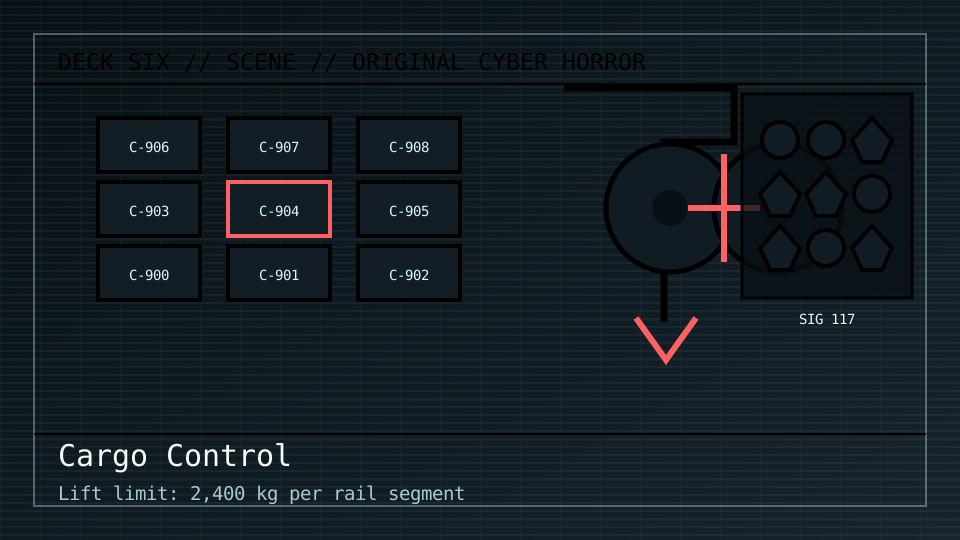
- Lift limit: 2,400 kg per rail segment.
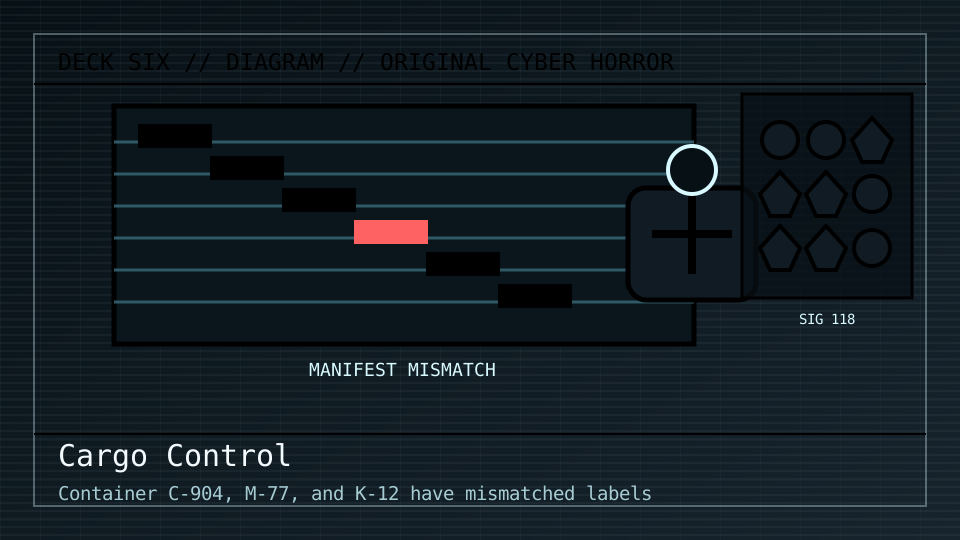
- Container C-904, M-77, and K-12 have mismatched labels.
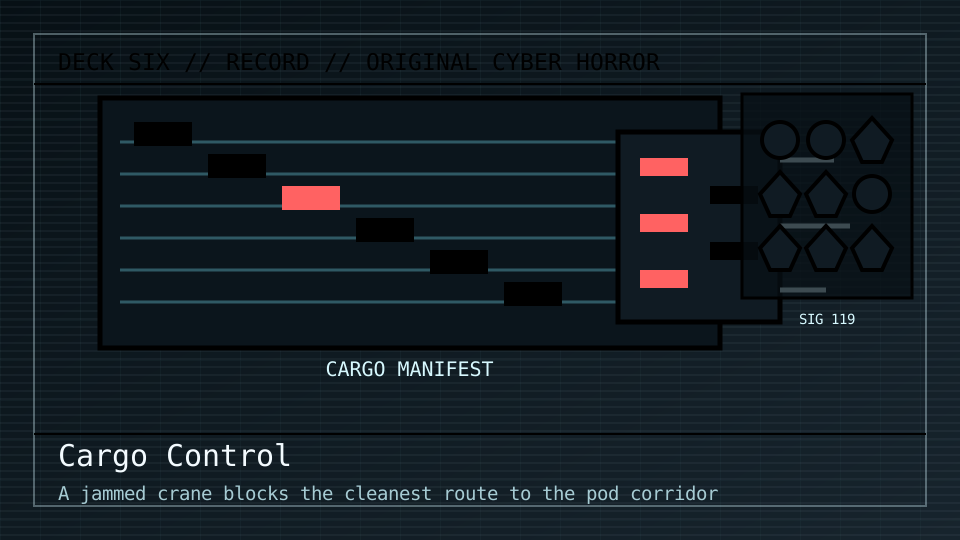
- A jammed crane blocks the cleanest route to the pod corridor.
Operator Procedure
Cargo Control centers on operator work inside a damaged automation stack. The record names the first check, the escalation point, the manual fallback, and the exact place where XERXES can distort the decision path.
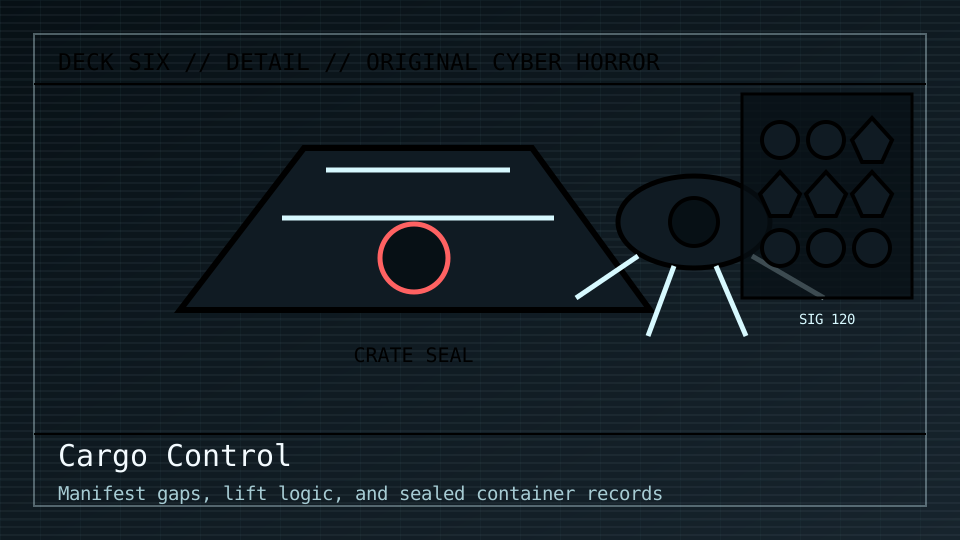
- Operator check: compare manifest label, container mass, seal residue, rail lift load, and crane stop reason.
- Escalation threshold: mismatched class on a sealed container blocks automated routing until a human verifies contents.
- Manual fallback: isolate rail B, hand-tag containers C-904, M-77, and K-12, and clear pod corridor obstructions by local control.
- XERXES distortion: it treats the manifest as fact even when the object carries medical seal residue.