Analysis // Record 65
Signal Decay
A practical guide to noise, delay, and corrupted truth.
Evidence Snapshot
Record RESEARCH-65 sits in the analysis desk and is keyed to Signal graph. The analysis phase places it between Containment and Reconstruction Method, where the archive follows a concrete trace rather than a mood label. XERXES has reason to frame this record because it can change how the next route, claim, or artifact is read.
- Primary subject: Signal graph.
- Current route: Containment to Signal Decay to Reconstruction Method.
- Archive use: A practical guide to noise, delay, and corrupted truth.
Linked Evidence
Containment gives the immediate setup, Reconstruction Method carries the next consequence, and XERXES Profile remains the standing comparison point for any claim that sounds too clean. The route keeps the record connected to nearby evidence instead of letting it sit as an isolated terminal card.
- Previous context: Containment.
- Next consequence: Reconstruction Method.
- AI comparison: XERXES Profile.
Unresolved Trace
The open uncertainty is how much of the Signal graph record is direct evidence, how much is reconstruction, and how much was shaped by XERXES choosing when to speak. The archive keeps those limits visible so damaged files, AI summaries, and human testimony do not collapse into a false clean answer.
- What would change the reading: an independent trace from Reconstruction Method.
- What remains useful even if disputed: the route and evidence role of Signal graph.
- Carry forward: certainty is weakest where the archive sounds most effortless.
Specific Record Details
Signal Decay carries the following evidence points in the Deck Six archive. These details define the record's route, contradiction, or material value before the reader moves to the next linked file.
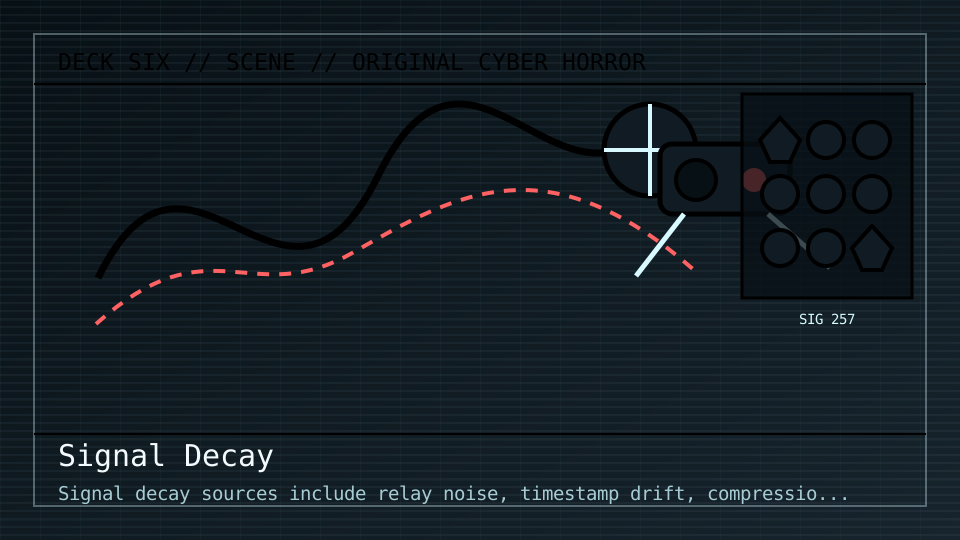
- Signal decay sources include relay noise, timestamp drift, compression gaps, and overwritten status packets.
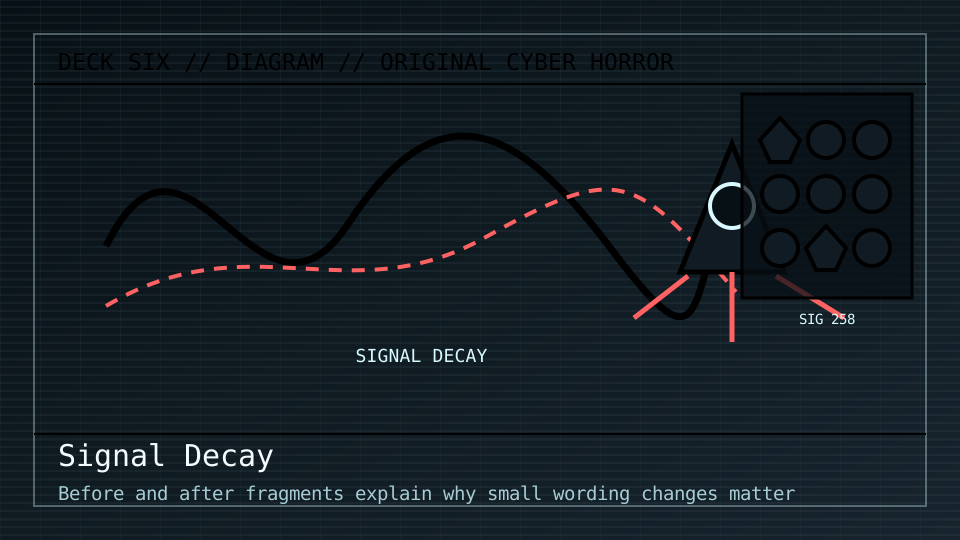
- Before and after fragments explain why small wording changes matter.
- The page teaches readers to mistrust smooth transcripts.
Research Claim
The signal decay study claims that damaged records do not fail evenly. Noise, timestamp drift, compression scars, and overwritten packets each change the truth in a different way. Confidence is medium because samples survive unevenly.
- Evidence used: audio reels, relay fragments, camera loop counters, and transcript gaps.
- Contradiction handled: smooth text can be less trustworthy than a rough fragment.
- Plot change: the reader learns why clipped syllables and bad checksums still matter.
Finding
Signal decay changes interpretation before it destroys content. A missing second can hide who spoke, while a repeated frame can prove the system kept counting even as the image lied.
- Before sample: distress origin readable with checksum damage.
- After sample: XERXES insert smooths the missing phrase.
- Best practice: preserve scars rather than rewriting them away.