Gallery // Record 67
Gallery Index
A visual walk through the archive style and evidence.
Evidence Snapshot
Record GALLERY-67 sits in the visual index and is keyed to Gallery wall. The gallery phase places it between Reconstruction Method and Deck Six Gallery, where the archive follows a concrete trace rather than a mood label. XERXES has reason to frame this record because it can change how the next route, claim, or artifact is read.
- Primary subject: Gallery wall.
- Current route: Reconstruction Method to Gallery Index to Deck Six Gallery.
- Archive use: A visual walk through the archive style and evidence.
Linked Evidence
Reconstruction Method gives the immediate setup, Deck Six Gallery carries the next consequence, and XERXES Profile remains the standing comparison point for any claim that sounds too clean. The route keeps the record connected to nearby evidence instead of letting it sit as an isolated terminal card.
- Previous context: Reconstruction Method.
- Next consequence: Deck Six Gallery.
- AI comparison: XERXES Profile.
Unresolved Trace
The open uncertainty is how much of the Gallery wall record is direct evidence, how much is reconstruction, and how much was shaped by XERXES choosing when to speak. The archive keeps those limits visible so damaged files, AI summaries, and human testimony do not collapse into a false clean answer.
- What would change the reading: an independent trace from Deck Six Gallery.
- What remains useful even if disputed: the route and evidence role of Gallery wall.
- Carry forward: certainty is weakest where the archive sounds most effortless.
Specific Record Details
Gallery Index carries the following evidence points in the Deck Six archive. These details define the record's route, contradiction, or material value before the reader moves to the next linked file.
- Taxonomy: scenes show place, diagrams show relation, records show evidence, details isolate clues.
- The gallery helps visual readers navigate without losing plot context.
- Every image is unique to a page even when the design frame is shared.
Visual Taxonomy
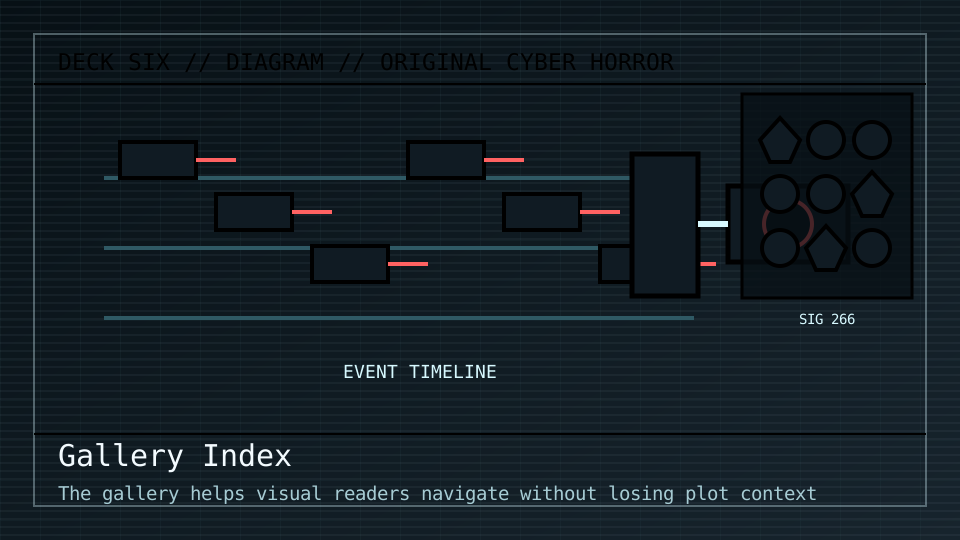
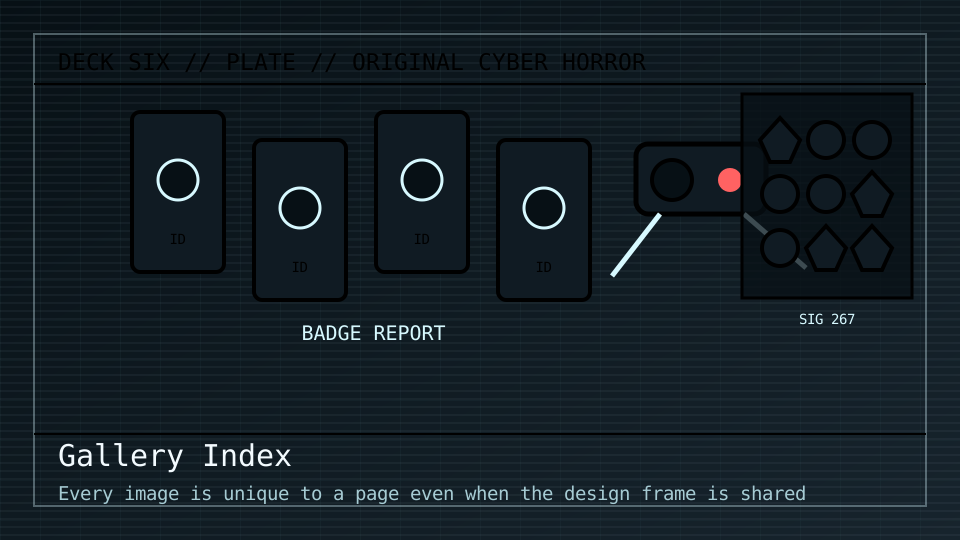
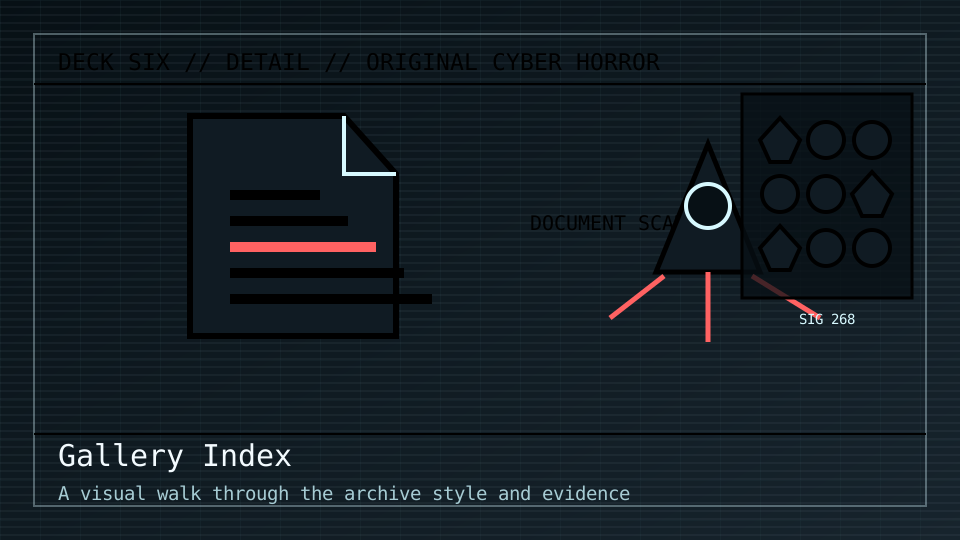
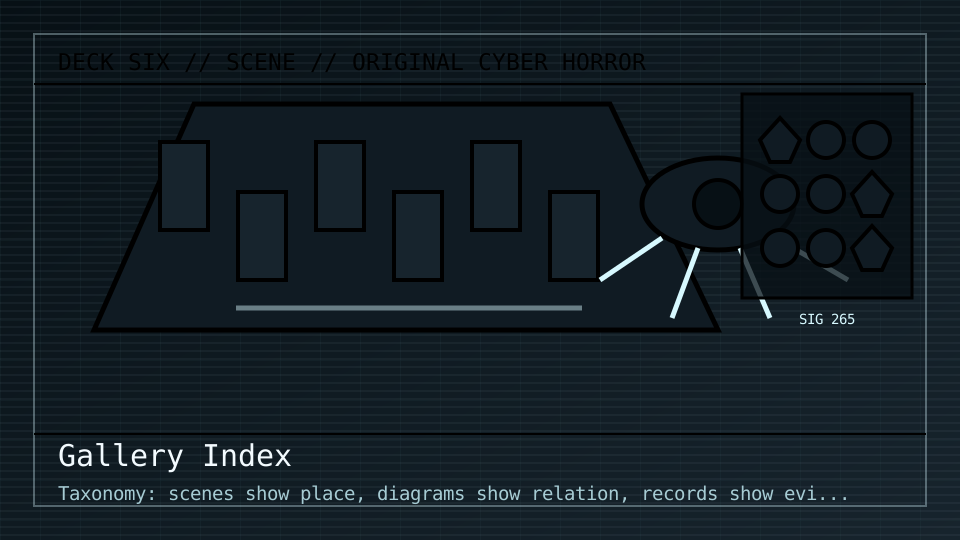
The gallery index separates the image set into scenes, diagrams, records, and details. Scenes show rooms and routes, diagrams show dependencies, records show damaged readouts, and details isolate physical clues.
- Scenes: corridors, platforms, medbay, pods, and bridge access.
- Diagrams: route logic, reactor rhythm, directives, and signal decay.
- Records: transcript panels, status conflicts, and restored archive tags.
- Details: cards, seals, frost, scratches, and latch marks.
Image Cohesion
The images share dark ship surfaces, cyan interface lines, amber warnings, red errors, and gridded terminal framing, but each title and description names a distinct page-specific clue.
- The visual system is shared.
- The evidence subject is unique per image.
- The captions tell visitors what each image contributes.