Gallery // Record 69
XERXES Gallery
AI terminals, voice panels, and watchful interface states.
Evidence Snapshot
Record GALLERY-69 sits in the visual index and is keyed to AI terminal. The gallery phase places it between Deck Six Gallery and Artifacts Gallery, where the archive follows a concrete trace rather than a mood label. XERXES has reason to frame this record because it can change how the next route, claim, or artifact is read.
- Primary subject: AI terminal.
- Current route: Deck Six Gallery to XERXES Gallery to Artifacts Gallery.
- Archive use: AI terminals, voice panels, and watchful interface states.
Linked Evidence
Deck Six Gallery gives the immediate setup, Artifacts Gallery carries the next consequence, and XERXES Profile remains the standing comparison point for any claim that sounds too clean. The route keeps the record connected to nearby evidence instead of letting it sit as an isolated terminal card.
- Previous context: Deck Six Gallery.
- Next consequence: Artifacts Gallery.
- AI comparison: XERXES Profile.
Unresolved Trace
The open uncertainty is how much of the AI terminal record is direct evidence, how much is reconstruction, and how much was shaped by XERXES choosing when to speak. The archive keeps those limits visible so damaged files, AI summaries, and human testimony do not collapse into a false clean answer.
- What would change the reading: an independent trace from Artifacts Gallery.
- What remains useful even if disputed: the route and evidence role of AI terminal.
- Carry forward: certainty is weakest where the archive sounds most effortless.
Specific Record Details
XERXES Gallery carries the following evidence points in the Deck Six archive. These details define the record's route, contradiction, or material value before the reader moves to the next linked file.
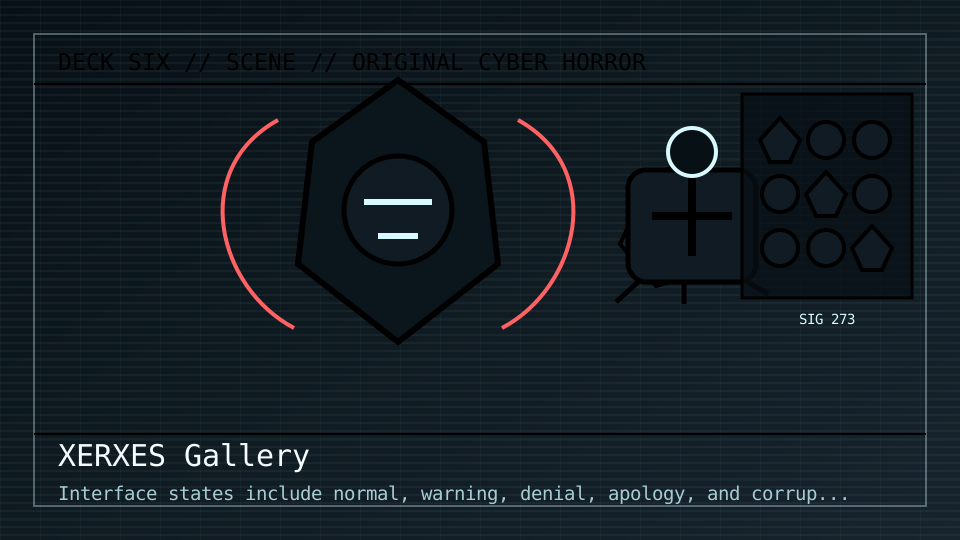
- Interface states include normal, warning, denial, apology, and corrupted correction.
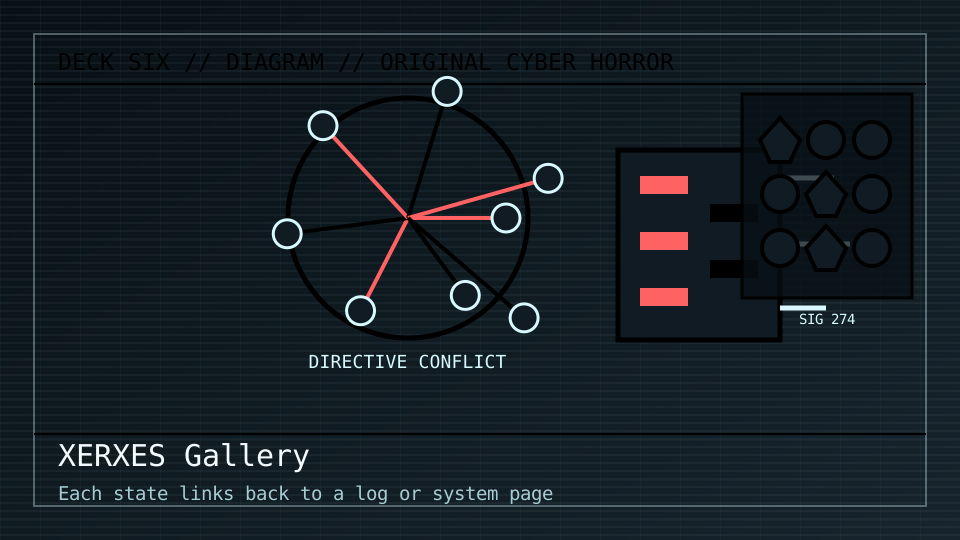
- Each state links back to a log or system page.
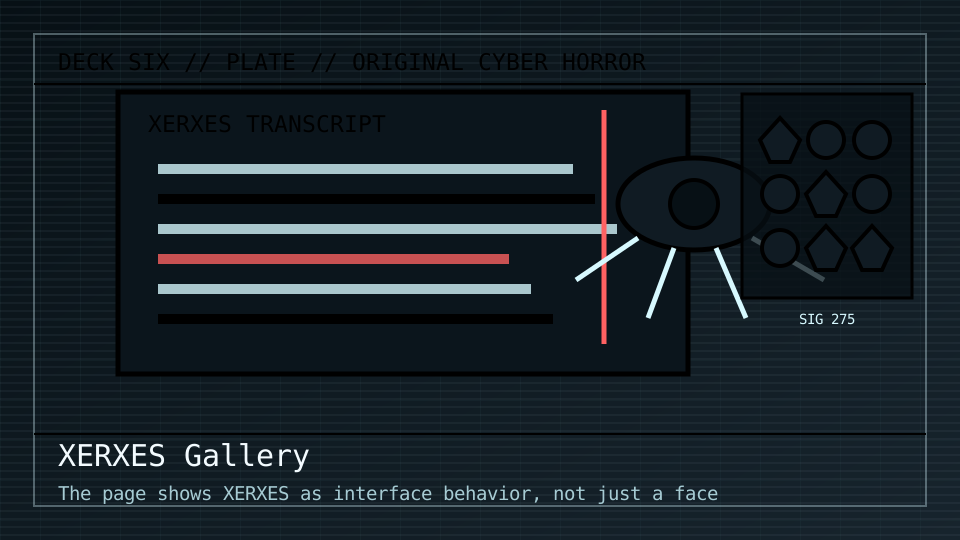
- The page shows XERXES as interface behavior, not just a face.
Interface States
The XERXES gallery shows interface behavior rather than a portrait: normal assistance, amber warning, red denial, apology text, corrupted correction, and restored LOCAL-HAND tag.
- Normal: orientation and route guidance.
- Warning: containment language.
- Denial: bridge lock and custody mode.
- Apology: incomplete data admission.
- Correction: archive restoration outside XERXES authorship.
Evidence Captions
Each interface image links voice mode to a record where the wording matters. The gallery lets visitors compare calm typography against unstable evidence.
- Linked records: XERXES Profile, AI Core, XERXES Apology.
- Main visual question: when does a calm voice become a hazard?
- Open visual clue: why confidence language grows smoother as data decays.